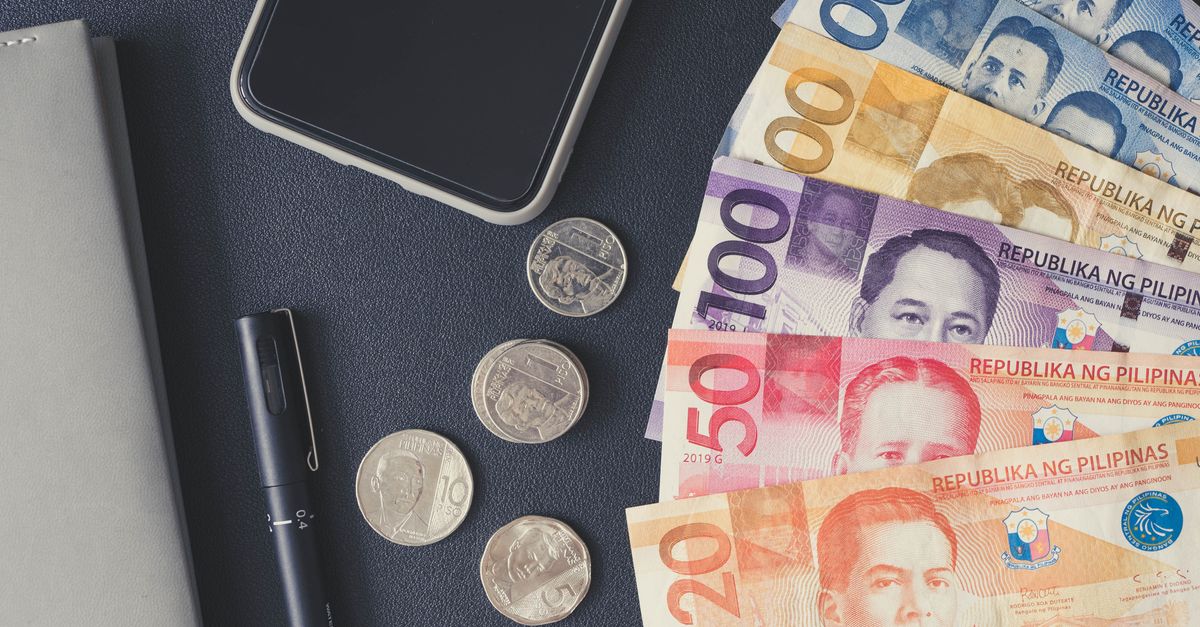
Every month you send money to Philippines for your parents in Cebu, and every month you wonder if a different app would leave more pesos in their account. Two services can quote the exact same $10 fee and still cost you $30 apart. The fee is only half the story. The other half hides in the exchange rate, and that’s where most of the real cost sits.
This guide breaks down the cost structure behind Remitly, Wise, GCash, and traditional bank wires. No stale fee percentages here, since those shift constantly. Just the framework you need to compare any two quotes correctly, right before you hit send.
The Real Cost of Sending Money to the Philippines
Total cost has two parts: the explicit fee and the exchange rate markup. The explicit fee is the number printed on the confirmation screen — $0, $3.99, $12.99, whatever it says. Easy to see, easy to compare.
The markup is quieter. It’s the gap between the rate a provider gives you and the real mid-market rate — the actual rate banks use to trade currency with each other. If the mid-market rate is 58.50 PHP per dollar and your provider gives you 57.80, that difference is pure profit for them, and it never shows up as a line-item fee.
Banks and some remittance services lean hard on this spread. A wire transfer might advertise “no fee” while quietly marking up the exchange rate by 3-4%. Meanwhile a competitor charges a visible $5 fee but gives you a rate much closer to the mid-market number. The visible fee can be the smaller cost.
This is exactly why comparing two services by fee alone is misleading. You have to look at both numbers together, every single time you send.
Remitly, Wise, and GCash — What Each One Actually Does
These three names get lumped together, but they solve different problems.
Remitly is a dedicated remittance app built for exactly this transfer. When you send money to Philippines through Remitly, you can choose cash pickup, bank deposit, or direct GCash delivery, with pricing that varies by speed and payout method.
Wise built its brand on rate transparency. It shows you the mid-market rate up front and charges a separate, disclosed fee, rather than folding its margin into the exchange rate.
GCash is not a sender at all — it’s a Philippine mobile wallet. You can’t “use GCash” to send from the US the way you use Remitly or Wise. Instead, GCash is a payout destination that many US services, including Remitly, Wise, Xoom, and WorldRemit, let you deliver funds into directly.
Traditional bank wire is the fourth option, and usually the slowest and priciest of the group, though it can still make sense for very large transfers where a bank relationship already exists.
Why a Small Exchange Rate Gap Costs More Than It Sounds
Here’s the math that changes how you should think about small percentage differences.
Say you’re sending $2,000 for a home repair back in Manila. Provider A gives you the mid-market rate exactly. Provider B is 1% worse. That 1% gap alone costs you $20 — before either provider’s explicit fee even enters the picture.
Now stretch that across a year of $500 monthly remittances to family in Cebu. A consistent 1% rate disadvantage costs roughly $60 annually, just from the spread. Add a $10 explicit fee difference per transfer, and the same choice costs over $180 a year.
None of this requires an unusual scenario. It’s just what happens when a small percentage difference gets multiplied by regular, recurring amounts. The same math applies whether you send money to Philippines once or every month, and the bigger the transfer, the more a “tiny” rate gap actually matters.
Sending Money to the Philippines Through GCash and Mobile Wallets
GCash has become one of the most popular ways for families in the Philippines to receive money, and for good reason. It doesn’t require a traditional bank account, which matters for relatives without easy access to a bank branch.
Direct-to-GCash delivery is often faster than a standard bank deposit. Funds can land in the recipient’s wallet within minutes in many cases, rather than the one to three business days a bank transfer can take. Your family can then use the balance to pay bills, buy load, or cash out at partner locations.
Several major US remittance services now support GCash as a payout option, not just Remitly. If you want a deeper walkthrough of exactly how to fund a GCash wallet from a US-based app, our companion guide on sending money directly into GCash covers the setup step by step.
The key point for comparison purposes: GCash payout doesn’t automatically mean a better rate. You still need to check the fee and the exchange rate on that specific transfer.
Bank Wires: The Old Way to Send Money to the Philippines
Bank wires were once the default way to send money to the Philippines, and some families still use them out of habit or for large one-time transfers.
The tradeoffs are real. Wires typically take longer to arrive, often one to several business days depending on both banks involved. They also frequently carry higher exchange rate markups than dedicated remittance apps, since the “no fee” marketing often just means the margin moved into the rate instead.
Wires can still make sense for large, infrequent transfers, especially six-figure peso amounts tied to a property purchase, where an existing bank relationship and wire limits matter more than a small rate difference. For a routine $300 or $500 send, a dedicated remittance app or wallet payout is usually both cheaper and faster.
How to Compare Providers Before You Send
Before you send money to Philippines again, run this quick check:
1. Look up the real mid-market USD-to-PHP rate on a neutral source like xe.com or a Google currency search. 2. Compare that number to the rate each provider quotes you for the same transfer amount. 3. Add the explicit fee to the rate gap in dollar terms, not just percentage terms. 4. Check delivery speed and payout method — bank deposit, cash pickup, or wallets like GCash.
Rates and fees shift by the day, sometimes by the hour, so a comparison from last month tells you almost nothing about today. Run this check every time, not just once when you pick your provider.
If you ever run into a dispute with a transfer, US federal protections apply to many international money transfers. The CFPB’s guide to international money transfers explains your rights, including receipt requirements and error resolution timelines.
FAQ
What is the cheapest way to send money to the Philippines?
There’s no single permanent answer, because rates and fees change constantly. The cheapest option is whichever provider currently combines the lowest explicit fee with a quoted rate closest to the real mid-market rate, for your specific amount and payout method.
Does GCash charge fees for receiving money from the US?
GCash itself may apply small fees depending on the transaction type and the sending service used. Check the current terms in the GCash app and confirm with your chosen remittance provider before sending, since these details change.
Is Wise cheaper than Remitly when you send money to Philippines?
It depends on the transfer amount, payout method, and current rates on the day you send. Both are reputable, transparent options. Compare the total cost, fee plus rate markup, for your specific transfer rather than assuming one is always cheaper.
How do I check the real exchange rate before sending?
Search “USD to PHP” on Google or visit a neutral site like xe.com. That gives you the mid-market rate. Compare it to what your provider quotes for the same amount to see the actual markup.
Can I send money to a GCash account directly from a bank wire?
Some banks support this depending on partnerships and routing details, but it’s uncommon and often slower than using a dedicated remittance app or wallet-focused service built for GCash delivery.
Do I need a Philippine bank account to receive remittances?
No. Cash pickup locations and mobile wallets like GCash let recipients receive money without a traditional bank account, which is one reason wallet payouts have grown so popular for Filipino families.
Quick Summary
- Total remittance cost is the explicit fee plus the exchange rate markup, and the markup is often the bigger, less visible piece.
- A 1% exchange rate gap costs $20 on a $2,000 transfer and can add up to over $180 a year on regular $500 monthly sends.
- Check the real mid-market PHP rate on a neutral source like xe.com right before every transfer, since rates and fees change constantly.
This post is for informational purposes only and does not constitute financial, tax, or legal advice. Laws and regulations change frequently. Please consult a qualified professional for your specific situation.