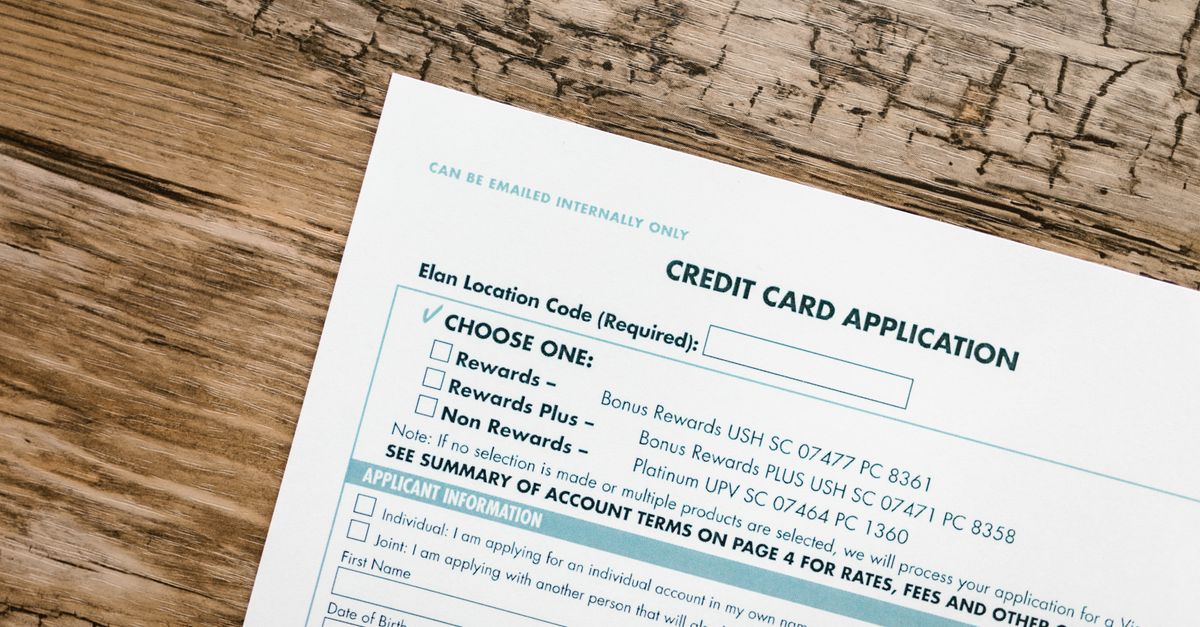
If you’re a US citizen or green card holder with a BPI or BDO account, FBAR Philippine bank accounts rules probably apply to you already. Most Filipino Americans hear “FBAR” for the first time from a friend, not from a tax professional. By then they’ve often missed a year or two. The rule itself is simple once you see it clearly: report any year your combined foreign balances topped $10,000. This guide walks through who files, how the threshold actually works, and what happens if you missed it.
FBAR and Your Philippine Bank Accounts: Who Must File
FBAR stands for the Report of Foreign Bank and Financial Accounts, filed as FinCEN Form 114. It applies to any US person. That includes citizens, green card holders, and anyone who meets the Substantial Presence Test as a resident alien. If you have a financial interest in or signature authority over a foreign account, the rule applies to you.
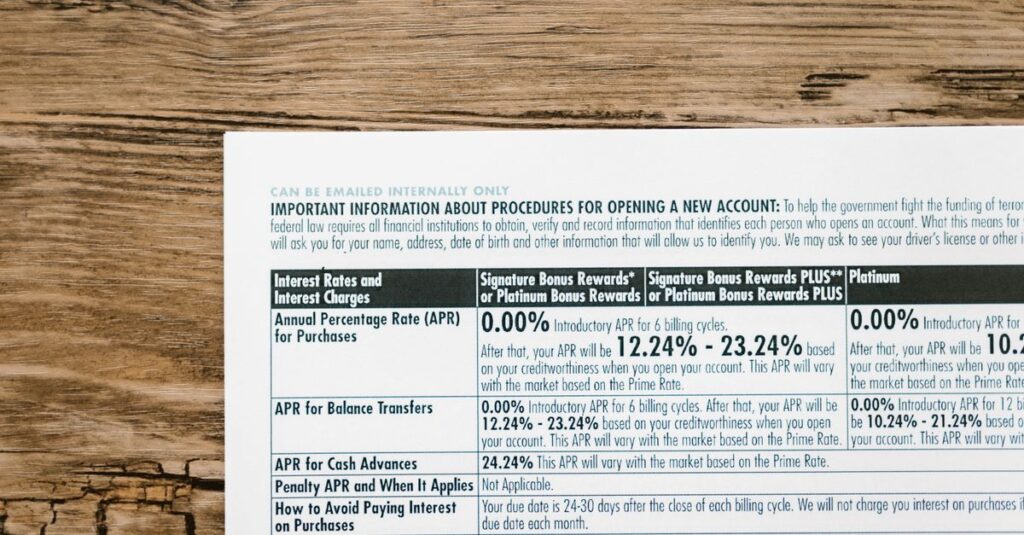
Filing happens through the BSA E-Filing System, not through the IRS. This surprises people who assume every US tax obligation runs through their Form 1040. FBAR is separate. It goes to the Financial Crimes Enforcement Network, a bureau of the Treasury Department, not the IRS itself. You still file it every year you cross the threshold, alongside your regular tax return.
A BPI savings account counts. A BDO checking account counts. Metrobank, Landbank, UnionBank — all of them count. So does a joint account you share with a parent still living in the Philippines, as long as you have signature authority over it.
The $10,000 Threshold Is Combined, Not Per Account
Here’s where most people get it wrong. The $10,000 threshold isn’t measured per account. It’s the combined total across every foreign financial account you hold, checked at any point during the calendar year. A BPI account with $6,000 and a separate BDO account with $5,000 together cross $10,000, even though neither one does alone.
This trips up a lot of Filipino Americans who keep money split across banks intentionally. Splitting funds between BPI and BDO does not lower your exposure under FBAR Philippine bank accounts rules. Regulators look at the sum, not the pieces. If your BPI, BDO, and any other Philippine account added up to more than $10,000 on even a single day, the filing requirement kicks in for that year.
Balance also matters more than interest earned. Many people assume a small amount of interest income means nothing needs reporting. FBAR doesn’t care about interest at all. It cares about the balance crossing the line, regardless of whether any US tax is owed on the account.
A Worked Example: BPI Savings Plus BDO Time Deposit
Picture a Filipino nurse in Texas with two accounts back home: a BPI savings account she uses for family remittances, and a BDO time deposit she’s building up slowly.
| Month | BPI Savings | BDO Time Deposit | Combined |
|---|---|---|---|
| January | $4,200 | $3,100 | $7,300 |
| June | $6,500 | $4,800 | $11,300 |
| December | $3,000 | $2,200 | $5,200 |
Neither account alone ever reached $10,000. But in June, the combined balance hit $11,300. That single month triggers the FBAR requirement for the entire year, even though the December balance dropped back under $6,000. The IRS and FinCEN look at the highest combined point, not the year-end snapshot.
She’d report both accounts, using the maximum value each one reached, converted to US dollars at the Treasury’s year-end exchange rate. This is exactly how FBAR Philippine bank accounts reporting works in practice: add every account together, find the highest combined point, then convert it.
Deadlines and Filing Through BSA E-Filing
FBAR is due April 15, matching your regular tax deadline. There’s an automatic extension to October 15. You don’t need to file a separate extension request for FBAR itself — it rides along with the general extension window.
The form gets submitted electronically through the BSA E-Filing System, maintained by FinCEN. It’s a distinct system from IRS e-file, and it asks for account numbers, bank names, and maximum balances for the year, converted to USD. Filing FBAR Philippine bank accounts reports through this system takes most people under thirty minutes once the balances are gathered.
FBAR is also different from FATCA reporting on Form 8938, which files with your actual tax return and has higher dollar thresholds. Our companion piece on FATCA and what BPI and BDO have already reported to the IRS covers that side in detail. Many people need to file both forms in the same year, since the two requirements overlap but don’t replace each other.
Penalties for Missing an FBAR on Philippine Bank Accounts
The penalty structure sounds frightening until you see how courts have actually applied it. The 2023 Supreme Court case Bittner v. United States settled a long-running dispute: the non-willful penalty applies per report, per year — not per account.
That means missing one year of FBAR Philippine bank accounts filing, even with five separate accounts, caps at $10,000 for that year. It’s still real money, and it compounds if multiple years went unfiled. But it’s far less catastrophic than the “$10,000 per account” reading some people feared before Bittner.
Willful violations are a different story entirely. Those carry penalties up to the greater of $100,000 or 50% of the account balance, and can include criminal exposure in serious cases. Willfulness generally requires knowing about the requirement and choosing to ignore it, so an honest, first-time miss rarely rises to that level. Still, don’t assume your situation is automatically non-willful without checking with a professional.
Interest, FATCA, and Catching Up on Past Years
Interest earned on a Philippine bank account is fully taxable on your US return as worldwide income. There’s no special carve-out for Philippine-source interest, no matter how small the amount. That’s a separate obligation from FBAR itself — you can owe FBAR reporting with zero US tax due, and you can owe tax on interest even from an account well under the FBAR threshold.
If you’ve missed prior years without realizing it, the IRS offers the Streamlined Filing Compliance Procedures. This program lets non-willful filers catch up on past FBARs and returns without the standard penalty structure applying. Eligibility depends on your specific facts, including whether your prior non-filing was truly non-willful. Anyone catching up on multiple years should work with a CPA experienced in FBAR and offshore account cases, rather than filing retroactively alone.
FAQ: FBAR for Philippine Bank Accounts
Do I still need to file FBAR if my Philippine bank accounts earn little interest?
Yes. FBAR Philippine bank accounts rules are based on balance, not interest earned. Even an account paying near-zero interest triggers the filing requirement once your combined foreign balances cross $10,000 at any point in the year.
Does the $10,000 threshold apply per account or combined?
It’s combined across all your foreign accounts. A BPI account and a BDO account that individually stay under $10,000 can still trigger FBAR once their balances are added together.
What happens if I only find out about this after several years?
Look into the Streamlined Filing Compliance Procedures. They’re designed for people who missed FBAR non-willfully and want to catch up without the full penalty structure. Talk to a CPA with FBAR experience before filing multiple back years.
Is FBAR the same as FATCA Form 8938?
No. FBAR files with FinCEN through BSA E-Filing. FATCA’s Form 8938 files with your IRS tax return and has different, generally higher thresholds. Some people owe both in the same year.
Do joint accounts with a parent in the Philippines count?
Yes, if you have signature authority or a financial interest in the account. Ownership isn’t required — the ability to direct transactions is enough to bring it into your FBAR calculation.
Can I file FBAR myself, or do I need a CPA?
Many people file FBAR themselves through the BSA E-Filing System once they understand the balances involved. If you’re catching up on missed years or unsure about willfulness, a CPA experienced with FBAR cases is worth the cost.
Quick Summary
- FBAR applies once your combined Philippine bank balances — BPI, BDO, or both — exceed $10,000 at any single point in the year.
- The non-willful penalty caps at $10,000 per year of missed filing after Bittner v. United States, not per account.
- Interest on Philippine accounts is separately taxable, and the Streamlined Filing Compliance Procedures can help you catch up on missed years.
This post is for informational purposes only and does not constitute financial, tax, or legal advice. Laws and regulations change frequently. Please consult a qualified professional for your specific situation.